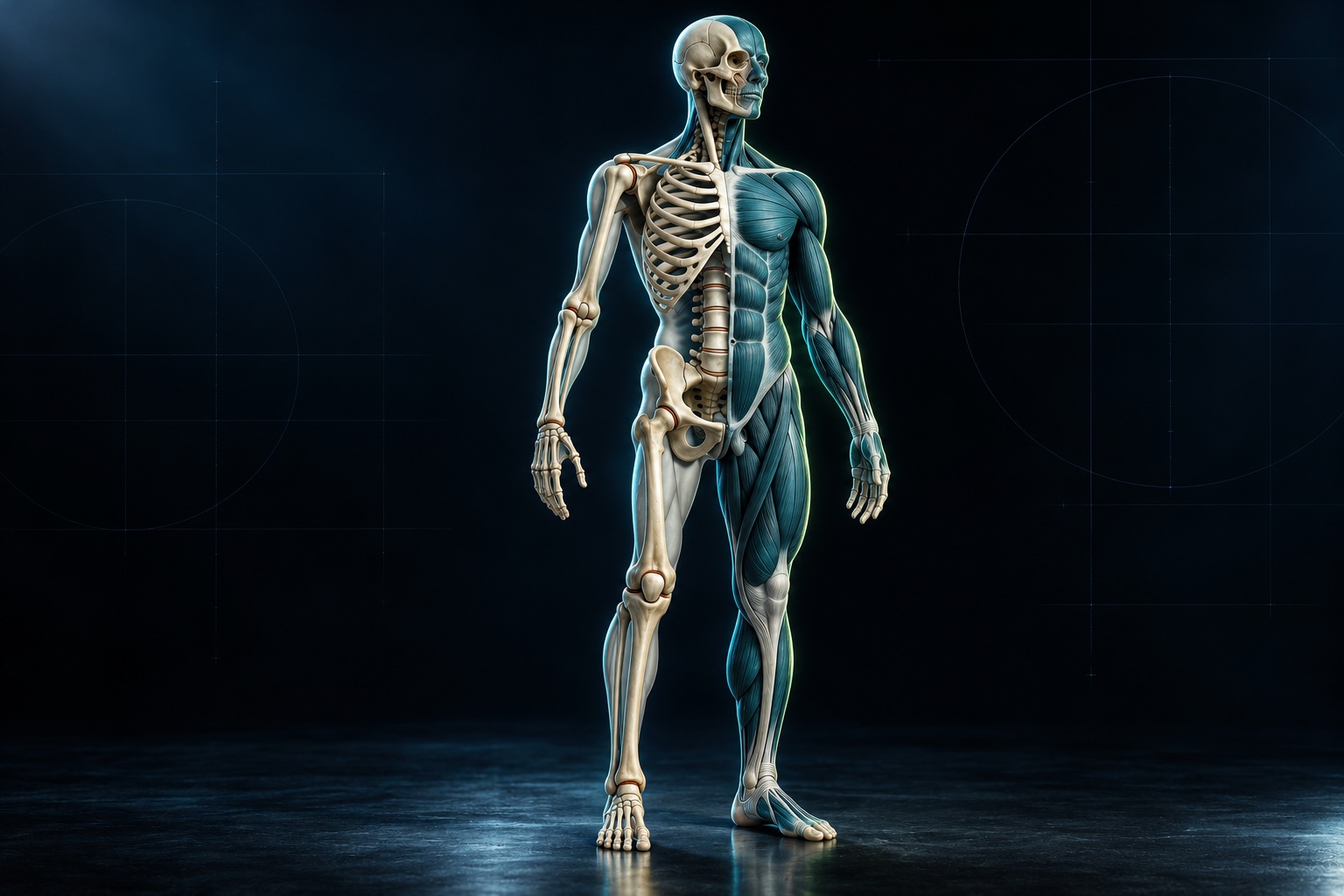
The spine is a coordinated system of discs, bones, joints, ligaments, muscles and neural structures. A product proposal has to fit that system and the person’s clinical presentation.
A closer look / 01Back pain and radiating symptoms are not the same question.
Symptoms centered in the back may lead to a different assessment from pain, tingling or weakness extending into a limb. The distribution, examination and imaging help determine which structures deserve attention. A report using the word disc does not remove the need to consider the neurologic picture.
Describe the two symptom patterns separately if both occur. Ask whether the plan is intended to address back pain, nerve related symptoms or another concern. This prevents a broad product promise from concealing a mismatch between the proposed target and the problem that most needs evaluation.
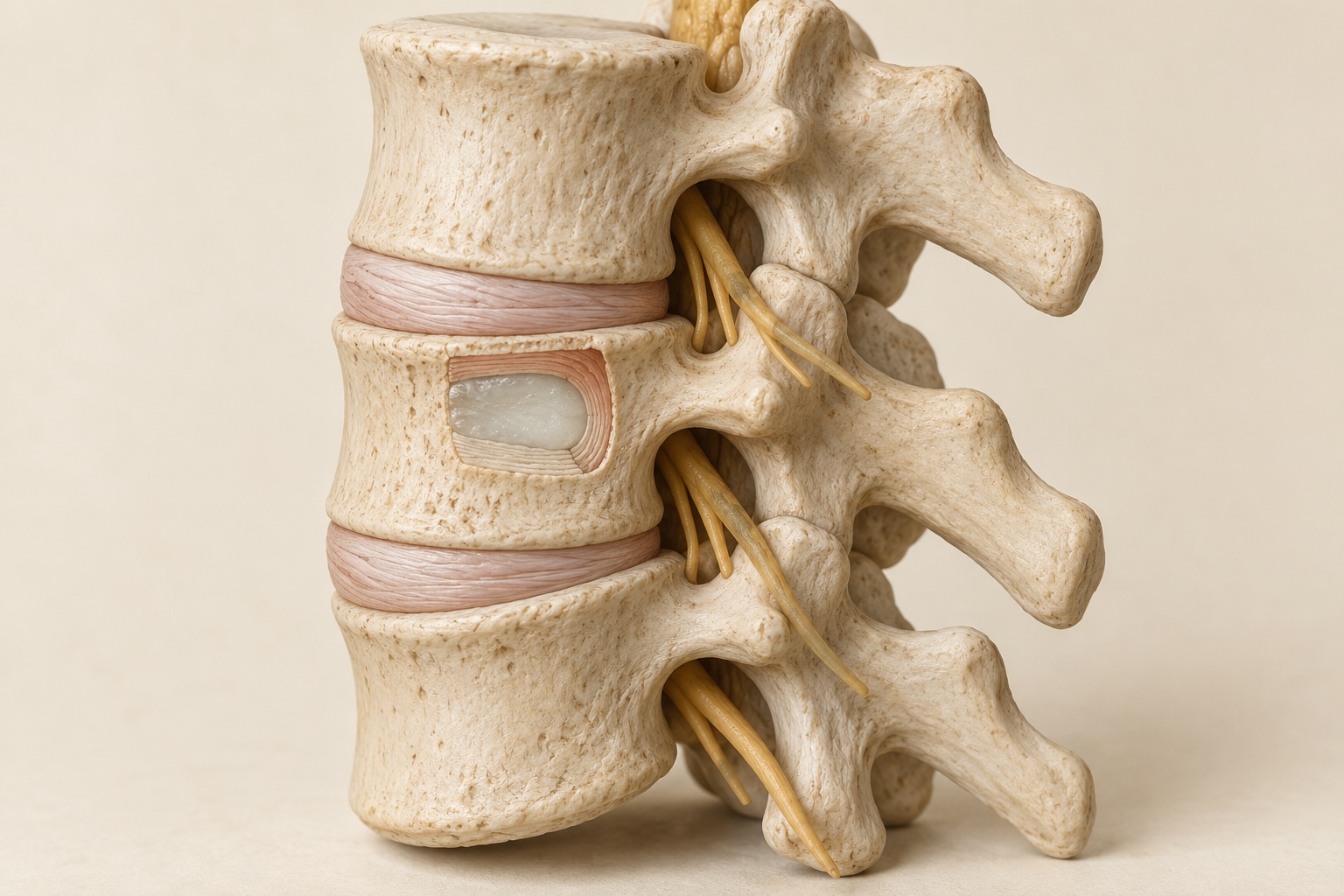
A closer look / 02Disc appearance is one part of a motion segment.
An image can describe disc height, shape or signal, but it does not show every contributor to pain and function. Adjacent joints, supporting tissues and nerves may be relevant. The clinician should explain why a disc is considered plausible and how strongly the available information supports that view.
Ask which findings would lead to another explanation. If several levels look different, the assessment should not assume every level is symptomatic or that every change needs treatment. A useful anatomical explanation narrows the clinical question without pretending that imaging alone provides certainty.
A closer look / 03Augmentation needs an exact definition.
A proposal to add material to a disc should name the product, composition, intended location and purpose. “Plumping” language can imply restoration without defining a clinically assessable outcome. Ask whether the claimed change concerns an image, mechanics, pain or everyday function.
Then ask which human evidence supports that exact product and use. Research on another material or a different patient group may not answer the question. The seller’s credentials or a facility certificate cannot replace product identity, formulation details and relevant human outcomes.
A closer look / 04The care pathway should explain both selection and exclusion.
A procedure discussion should identify why an approach might be considered and why it might be inappropriate. That includes the diagnosis, symptom severity, neurologic findings, previous care and the presence of another condition requiring attention. A product name does not create candidacy.
Ask how established nonsurgical care, other procedures, specialist input or surgical evaluation compare when relevant. The recommendation may be to do more diagnostic work or not to proceed. A useful explanation still provides a next step and a plan for reviewing change in symptoms or function.
A closer look / 05A structural measurement needs a patient important interpretation.
An intervention may be described through a change in disc height, hydration related imaging or another anatomical measurement. Even if a measurement changes, the clinical question remains: does that change reliably translate into a meaningful difference in pain, function or the need for other care? A structural outcome and a patient outcome should be reported as distinct results.
Ask how the measurement was obtained, whether there was an appropriate comparison and how long any observation lasted. Also ask whether the people studied had the same clinical problem as you. The review should not use an attractive image to imply that the source of pain has been corrected. A diagnosis first consultation keeps the treatment goal understandable and avoids selecting a procedure mainly because it appears to reverse an imaging term. The result that matters must be defined before any claim is judged.